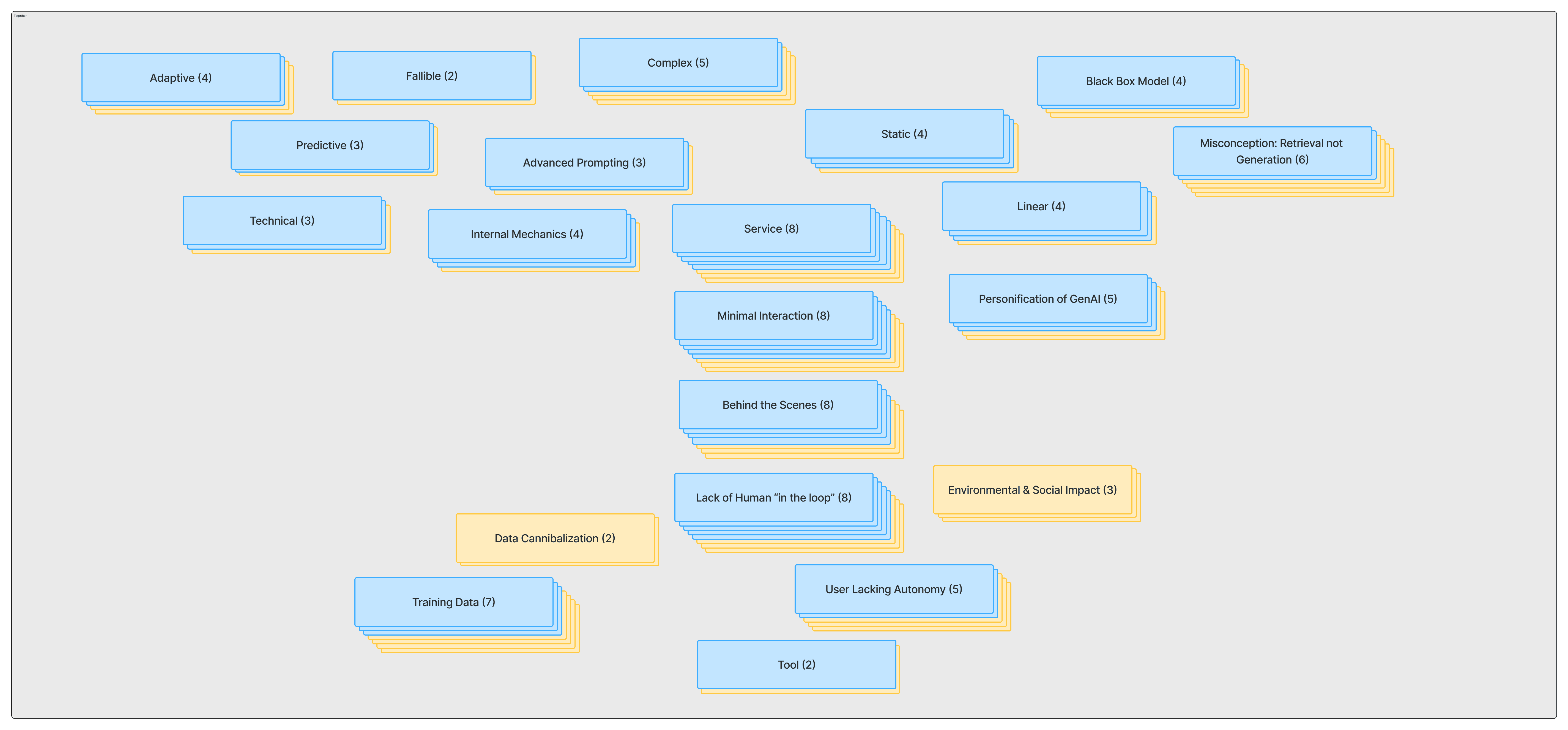
Correct the retrieval-vs-generation misconception at first use: a short, concrete “this is generated, not looked up” explainer, not a general AI primer. (High impact, low effort)
Make iteration visible: surface drafting and revision steps so the process stops reading as a black box. (High impact, medium effort)
Design for visible authorship in brainstorming tools: keep a visible line between “your seed” and “AI’s expansion.” Ownership anxiety, not usefulness, is what keeps AI out of the highest-value stage of the writing process, and solving it is how a writing-tool vendor unlocks adoption earlier in the workflow, not just at the polish stage. (High impact, medium effort)
Name the ethical concerns before they curdle into distrust: three of nine drawings raised ethical, environmental, or dataset-provenance concerns unprompted, alongside their technical models, not as an afterthought. For anyone building or deploying these tools, an unaddressed concern like that is an adoption-trust risk, not just a comprehension gap.